First published in il Giornale newspaper for InsideOver
on 18 November 2019
How Fashion Week Is Causing Slave Labor To Thrive
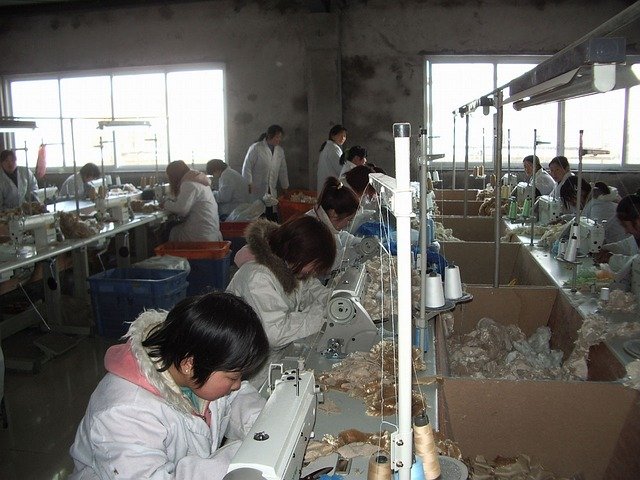
The concluding show of the London Fashion Week took place this week, with many piling plaudits on the well-known designers and labels. Showcasing the latest must-have styles, the glamorous event has long been a promising venture for those who profit in the industry. Yet, amidst this, there is little talk about the darker side of fashion and its underbelly of slave labour and child labour.
According to the Global Slavery Index report in 2018, $127.7 billion worth of clothes with links to modern slavery are imported each year by G20 nations; to put it into perspective, these countries are involved in 80 per cent of the world’s trade. The manufacture of garments has increased to fulfil the ever-increasing, yawning demand for fast fashion. But who is manufacturing it?
Fast Fashion
Fast fashion is fashionable clothes – often mimicking styles from the catwalk – sold at much cheaper prices with a lightning-speed turnaround. Yet, few question the bargain-basement price tags for these trendy apparel.
The pitfalls of fast fashion were brought to public attention when 1,135 factory workers were killed and thousands injured in Dhaka, Bangladesh in 2013, in what has been described as the deadliest garment factory accident in history.
In the incident, Rana Plaza – an eight-story commercial building – collapsed, killing many of its poverty-stricken inhabitants. Despite the building being condemned as highly unsafe and having been evacuated just the day before, the workers – mostly illiterate – were forced back to work with the threat that they would not be paid their monthly wages if they refused to work in the unstable structure.
Since most of the world’s clothes are mass-produced in Asia, the poorest become the easiest to exploit. Unsavoury work conditions, slave labour, and even child labour are rampant.
More Transparency Needed at Fashion Week?
Orsola de Castro is the Creative Director and co-founder of Fashion Revolution – a global NGO campaigning to ensure that clothes are sourced, produced, and consumed more safely and ethically. Speaking with Inside Over at London Fashion Week, Castro said she firmly believes that the industry is not transparent enough nor does it give sufficient information to drive systemic change and improvement.
“The main issue is that a lot is kept hidden and an enormous amount of these goods are delivered in the UK. And without transparency or public disclosure from the fashion brands, it will be difficult to change the system,” Castro explained. “In a transparent system, people will be able to scrutinize more, but in a non-transparent system, consumers will just have to buy what is given to them. We can not fix what we can not see. And transparency is about seeing the problem so it can be addressed,” she added.
De Castro believes that one step forward is to seek out emerging designers or labels that put more focus on ethical work practices, meaning they will not work alongside or with slave labour or child labour.
“Don’t look at fashion as just being mainstream. We need to distinguish between brands that uphold certain principles – like those who will not go anywhere near slave labour. In a nutshell, when it comes to London Fashion Week, we need to stop glorifying these fashion labels that we call our fashion heroes and find new ones,” Castro emphasized.
Labour Behind the Label
Another organization that mirrored the need for more transparency at London Fashion Week is Labour Behind the Label – the UK platform of the International Clean Clothes Campaign which campaigns for garment workers’ rights worldwide
“There is still a huge lack of transparency in supply chains. This allows for poverty pay, exploitation, and modern-day slavery to flourish because it is still very much hidden,” insisted Meg Lewis, Campaigns Manager at Labour Behind the Label.
“We, as consumers, are not shown the link between the finished garment, and the conditions in which it was made. If we were shown that link, it would really change the way we think about and value our clothes,” Lewis said. “The trend towards cheap fast fashion means that brands often force suppliers into low-pricing models, which simply do not allow for garments to be made without workers working in modern slavery conditions.”
It is no secret that the fashion industry is built around a labour-intensive and low-wage model. The workers in factories are predominantly young women from poor, rural areas, who are vulnerable to exploitation. As such, there is a higher likelihood for instances of modern slavery to occur, which includes child labour.
Labour Behind the Label has been working towards improving transparency in supply chains by asking brands to sign their Transparency Pledge and commit to publishing a list of factories and workshops where their clothes are made.
“Around 40 brands have now signed the pledge, which is fantastic,” Lewis said, though adding that “there is still a long way to go.”