
on 30 Aug 2017
What goes into making your favorite designer handbag?
Designer Kate Spade once famously said, “A handbag is only one item to be worn with a complete outfit. Add a peony pink leather handbag to a charcoal gray suit, for instance, and the impact is chic with a touch of wit.” Modern woman’s craving for designer handbags has sky rocked in the past few years.
In a detailed report, Fashionista has revealed:
“Although handbag sales have increased in the U.S. by 5 percent since 2014, totaling $11.5 billion in 2015, the growth is mostly thanks to baby boomers who take the “treat yourself” mantra very seriously (must be all that discretionary income). Meanwhile, women between 18 and 34 years old (millennials! hi!) have only increased handbag sales by a mere 2 percent.
The difference among the generations comes down to shopping habits. The handbag buying process among millennials is what the NPD Group likens to buying a car, rather than, say, a brand new shirt. In fact, the task starts more than a month in advance among 41% of millennials, and 61% of them start browsing for choices online first before pulling the plug on a final purchase. “The handbag has become a signature item, and retailers need to take advantage of selling it in-store, up-front and center, as their own signature,”says Marshal Cohen, The NPD Group’s chief industry analyst.”
Yet, what goes into the process of making some of your favourite designer handbags? In this article, we get to go behind the scenes for an up-close-and personal look to the manufacturing process.
Firstly, each handbag can take many hours of work and there are various complexities before it reaches the store to be purchased. There is a lot of work that goes into all of the manufacture of designer handbags. It is a labourious process and uses many different creatives. In the making of a Chanel handbag, the desigher says:
“It takes 4 to 5 years for each craftsperson on the site to learn how to perfectly master the techniques necessary for the manufacture. The iconic Chanel handbag demands over 180 manufacturing operations and as many minute gestures.”
The Design
Before any designer handbags are created, the very first step is planning the design of the bag itself.
One of the most important questions that is asked is, “What would the bag be used for and what sort of things will it carry?” This facilities being able to visualise the concept of the design and the practicalities of it also. For instance, there it may be intended for a bag to be a stylish clutch for nights out, or a sizeable handbag that can fit a lot more things for everyday use.
Sometimes, designer handbags can come in a specific range, so that a similar style is maintained over a range of handbags such as totes, purses, over sized bags, etc. Furthermore, some designers are immediately recognisable by using a standardised print in a lot of their creation.
One of the most famous prints has been the monogram canvas used by Louis Vuitton. Yoogiscloset delved into the inspiration behind it by saying:
“It was Georges Vuitton, Louis Vuitton’s son, who decided in 1896 to carry on the adventure begun by his father by designing the famous Monogram Canvas. At the time, to foil counterfeiters, he created a canvas bearing bold graphics, a pattern that was instantly recognizable. The unique pattern is composed of flowers, a universal and timeless symbol, and the entwined Louis Vuitton initials. The pattern was based on the trend of using Japanese and Oriental designs in the late Victorian era. The Monogram fabric is crafted out of durable vinyl coated canvas.
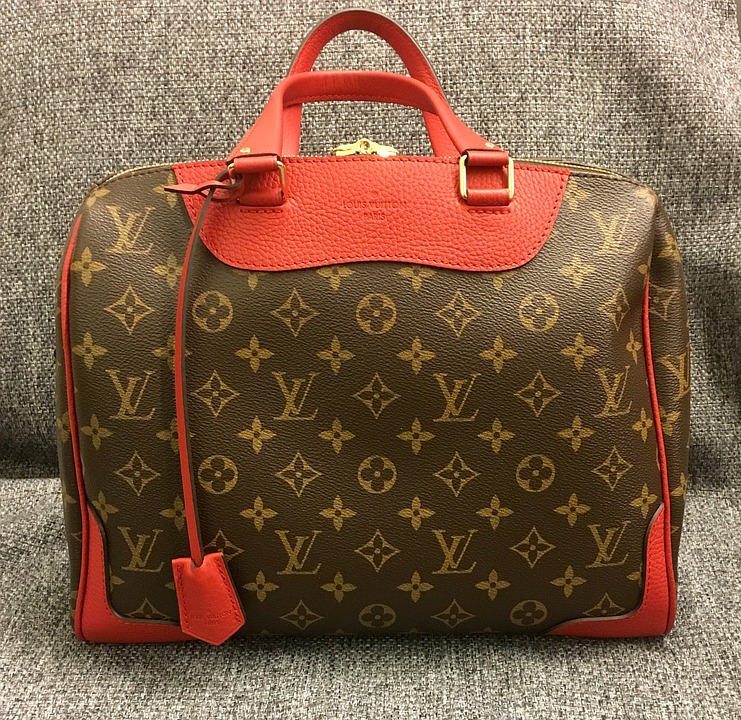
Since it was first designed, the Monogram canvas has been associated with natural, vegetable-tanned vachetta cowhide leather. Its smooth, natural grain brings out the harmony of the carefully selected hide. The transparency reveals the natural markings, such as veins and wrinkles, proving it has not been treated. This delicate, easily scratched leather is a testament to the bag’s history and develops a unique amber patina, unique to each bag and greater suppleness with time. The leather starts out with a white tone and gradually darkens over time, leaving a rich caramel or amber color.”
The Material
The next important thing that needs to be considered when creating designer handbags are the material that will be used to make it. This extends to both the interior and exterior for the bag and will also include things like colour and fabric.
Considering the high retail prices, designers are attracted to using material that will provide more durability and longevity. Some designers have also been championing sustainable fashion and promoting its benefits to the public.
One such designer is Stella McCarthney whose brand statement says:
“We understand that it is our responsibility to do what we can to become a more sustainable company. We are responsible for the resources that we use and the impact that we have. We take responsibility for operating a business and maintaining a supply chain that respects the planet as well as the people and animals on it.
We know that we are not perfect. We also know that sustainability isn’t just one thing, it isn’t just organic cotton – it’s organic cotton, plus wind energy, plus not using PVC, plus thousands of other little steps that eventually make a more responsible and environmentally conscious company. In many ways we are just beginning our journey towards becoming more sustainable, but we are dedicated to continuing our work towards being able to replace what we have taken from the environment. We will continue to consider the impact we have on the planet as we design clothing, open stores and manufacture our products. We will probably never be perfect, but you can rest assured that we are always trying.”
Cutting
There are various methods in which the pattern for designer bags are cut. Generally speaking, they are cut either by hand, with special instruments, or digitally. It is a process that requires precision and accuracy, especially when dealing with material that may be costly or highly sought after.
Stitching
Often times, the fabric is stitched together by artisans who undertake the meticulous practise to ensure that each stitch is perfect and would not come undone. Some of these highly skilled workers have undergone years of training to perfect what they do.
Some designer handbags are made with very special stitching that is unique to the brand. One such designer is Hermes, who is known for its famous “saddle stitch”. The workers receive special training in Paris where they go through rigorous courses to ensure they can do this specific stitch, which involves two needles that pass through the same hole with an awl that pierces the first hole before guiding the next needle through.
Sometimes, the brand’s insignia may be added or sewn in at one of these stages, for instance, with Chanel designer handbags.
After the stitching is finished, the artisan may then use a hammer to make the seams less noticeable and to smoothen out any bumps. Once this is complete, they may trim off or wax any edges for the final finish.
Hardware
The next step would be interior parts of the bag and any hardware that may be required. These will include things such as screws, zippers, buttons, and compartments that may be required such as mini pockets to fit keys, cards, cell phones, etc.
The hardware that is chosen is carefully scrutinised, and some designers like to have their own insignia embellished on some of the parts like the buttons and zippers. Other things that will be considered are soft linings for added comfort or waterproof elements. In this stage, printed material or insignias for the brand may also be included to the interior.
Making the handle
Once the designer handbags have been created, the next step is to create the perfect handle that goes with it. This would have already been part of the initial design of the bag, however, it can still be a long process.
The same principles will apply such as careful selecting of the material, the bag’s purpose, and of course, ensuring its longevity so that it does not snap off once the bag’s items creates weight.
Inspection
The final part of the process is carefully looking at each bag to ensure that there are no defects or faults. The products are put through meticulous testing to ensure that the highest quality is adhered to. If there are, the bag may be sent back or completely scrapped. If not, it would then receive its last “seal of approval” before it will be released to the retail market.